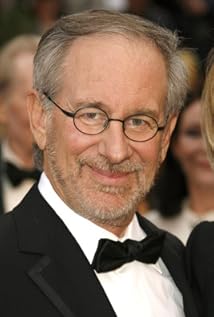


In Steven Spielberg's movies he uses a lot of long takes (Scenes taken in one long continuous shot). Some examples of these and how long they lasted include;
- Minority Report (1:13)
- Jurassic Park (1:19)
- Raiders Of The Lost Ark (1:26)
- War Horse (1:38)
- Saving Private Ryan (1:41)
- Jaws (1:43)
- Schindler's List (2:15)
- The Adventures of Tintin (2:32)
Spielberg disguises these shots so that the audience can concentrate on the drama of the scene and not of the energy of the camera.
In Spielberg's movies he also uses a lot tracking shots combined with zoom which is when the camera zooms in to the subject as well as tracking its movements, these are usually medium shots which zoom in to close ups. He uses these to show the significance of a character or an object.
Spielberg commonly uses over the shoulder shots that make the audience seem claustrophobic. This can be because of the object/ person in the foreground is taking up an uncomfortable amount of space which pushes the main character up against the side of the screen, this emphasizes a particular moment in the film and its importance.
Another technique that Spielberg uses is the use of mirrors to emphasize characters. This emphasizes the character as they take up the entire screen with different reflections showing they are the most important on the screen.
Many Spielberg films include shots which consist of dark silhouettes against back lighting, these are usually used during scenes of intense but quiet drama, such as when characters are hiding. Spielberg also frames shots so that they are looking at the subject through another object.
Spielberg commonly frames shots through simple shapes such as rectangles and circles but he also commonly frames shots through people (such as under arms, etc.)
In Spielberg's movies he also uses a lot tracking shots combined with zoom which is when the camera zooms in to the subject as well as tracking its movements, these are usually medium shots which zoom in to close ups. He uses these to show the significance of a character or an object.
Spielberg commonly uses over the shoulder shots that make the audience seem claustrophobic. This can be because of the object/ person in the foreground is taking up an uncomfortable amount of space which pushes the main character up against the side of the screen, this emphasizes a particular moment in the film and its importance.
Another technique that Spielberg uses is the use of mirrors to emphasize characters. This emphasizes the character as they take up the entire screen with different reflections showing they are the most important on the screen.
Many Spielberg films include shots which consist of dark silhouettes against back lighting, these are usually used during scenes of intense but quiet drama, such as when characters are hiding. Spielberg also frames shots so that they are looking at the subject through another object.
Spielberg commonly frames shots through simple shapes such as rectangles and circles but he also commonly frames shots through people (such as under arms, etc.)

No comments:
Post a Comment